Showing posts with label new book. Show all posts

02 September 2009

New Book: The Shan: Refugees without a Camp by Bernice Koehler Johnson
By Naw Liang (London, UK and Belgrade, Serbia)


Mai soong kha!
It appears that we are on a roll as far as posts are concerned, and I am enjoying the rise in productivity. I had hoped to have a more detailed, research-oriented piece ready to publish (my stuff actually - very selfish I know), but this summer has been a Shan book bonanza. And, this latest text appears to be making its way around Shan communities - at least bulletin boards and blogs - much quicker than the last couple. So, without further adieu, here is another book to add to your Shan-specific reading list...

The Shan: Refugees without a Camp by Bernice Koehler Johnson
Several summaries/recommendations have already appeared online for this book, so I will limit my comments (For details, please visit S.H.A.N (here) or Shan Refugee Schools (here) reviews or do a quick Google search (here).

As told by Feraya Nangmone, Bernice Koehler Johnson has a wealth of knowledge about and contact with Shan in Northern Thailand where she visits annually to teach English to Shan refugees. The Finnish-German American, raised on the windswept prairies of Minnesota (I can sympathise - I come from Saskatchewan, Canada), Koehler Johnson has been touched by the harrowing stories that refugees lug, along with their meagre possessions, into Thailand for safety; it also includes their insights into the difficulty of assimilating into Thai society (a truly sad saga) and their peripatetic (often forced) existence in Thailand.

The Shan: Refugees without a Camp is a cornucopia of issues pertinent to Shan (and other ethnic minority) refugees along the Thai-Burma border: human rights abuses, the sex trade, unemployment, ostracism and more. This is not a happy-go-lucky travel journal of jaunts into Shan State and the lovely people she meets on the way - it is hard-hitting stuff about suffering, isolation and invisibility.

Well, that is all I can/have to say about yet another key Shan book I have yet to read. The list just keeps getting longer. Time to stop typing and get reading.

Naw Liang

29 November 2008

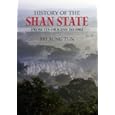
History of the Shan State: From Its Origins to 1962 by U Sai Aung Tun
by Naw Liang
in London, UK and Trieste, Italy


Mai soong kha
everyone!

Athough this is a shorter posting than usual, it is no less important. As many Shan enthusiasts and productive academics can attest, the expanse of literature on the Shan literature is, though growing daily, lacking. After only a few years of investigation, interested can find that, without becoming multi-lingual or an expert researcher, additional information on the Shan can be difficult to find. So, when a new text focused on the Shan is born, it is bound to garner a wealth and wave of interest.

Such is the case with a recent publication on Shan history by acclaimed historian U Sai Aung Tun.


Published on 25 November 2008 by Silkworm Books, the South East Asian publishing specialist, History of the Shan State: From Its Origins to 1962 by Sai Aung Tun is hot off the presses and ready to impress (and stir up debate) on this latest attempt to package the history of the Shan State and its people.
Sai Aung Tun, a noted Professor of History and International Relations at colleges throughout Burma/Myanmar as well as a member of the Myanmar Historical Commission, has published widely on the Shan and the Shan State, though only a few of his works are available in English and online; read his article on Tai Ethnic Migration for "Dynamics of Ethnic Cultures Across National Boundaries in Southwestern China and Mainland Southeast Asia: Relations, Societies, and Languages" edited Hayashi Yukio (Kyoto University's CSEAS) and other works (such as Tun's National Library of Australia profile page here) for some insight.

At the moment, Sai Aung Tun has taken on the task of trying to unravel, understand and express the history of the Shan State until the events of 1962 - the period in modern Shan history. While it is unclear (I haven't been able to get my hands on a copy yet) whether or not his politics, affiliations and supervisors will colour this historical text, I sincerely hope that this, as a native Shan and with unlimited access, Sai Aung Tun had endeavoured to create a brilliant and insightful work for Shan enthusiasts worldwide to devour and debate for some time to come.

For now, best of luck getting your hands on a copy - either through Amazon, other sellers or your local (and well stocked) library - and leave your comments (good and not-so-good) at will. I look forward to hearing what our enlightened community has to say.

Gyan cha tha ba seh.

Naw Liang