Showing posts with label Sai Aung Tun. Show all posts

30 January 2009

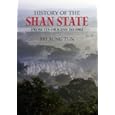
A Book Review of Sai Aung Tun's "The History of the Shan State: From its origins to 1962" by David Scott Mathieson

With mini-commentary by Naw Liang in London

Mai soong kha!
Welcome to 2009 and welcome back to All About Shan Studies. It has been a busy and extended holiday period, including a short journey to Upper Burma/Myanmar (more to follow), but we are now well and truly back into the swing of things academic, intellectual, research-based and otherwise on the Shan and Shan State.

To start off the year, the following is a short summary and commentary on David Scott Mathieson's (see outdated bio here and recent publication here) recent book review of Sai Aung Tun's The History of the Shan State: From its origins to 1962, which was published in late 2008. All about Shan Studies provided a brief description of the book in a previous posting, but, sadly, I have yet to get my hands on a copy, something I plan to rectify immediately. For now, Mathieson's review is an excellent substitute/starter. Enjoy.

An excellent review
I thoroughly enjoyed Mathieson's review of Sai Aung Tun's sorely-needed text on modern Shan history; as Mathieson points out, the Shan, though being the second largest ethnicity in Burma/Myanmar, haven't been properly (read: in a generalist way) researched since J. G. Scott's bible was published some 100 years ago. This work, likely warts and all, is bound to become a vade mecum for Shan enthusiasts, students and researchers for years to come.

Hearing from Mathieson that the text is "...multi-disciplinary, blending historiography with political analysis, anthropology and naturalist notes on flora and fauna, including...maps, fascinating ephemera of memos, Shan script, letters and photographs, and lengthy extracts of quotes from a wide range of sources..." has further tweaked my interest and almost banished my fear at shelling out an apparent £60+ (Amazon estimated prices) for my own copy. This cornucopia of knowledge, much of it likely old hat for seasoned Shan followers, will raise its merit as a quick and modern reference guide. Let's just hope that Mathieson is not being overly charitable with the compliments. Furthermore, Mathieson's labelling of Sai Aung Tun's book as reading "...like a late-19th-century British Geographical Society study" raises its value in my estimation, just as it does in his. I am sure that this perception is in the majority of those out there as well.

The apparent faults Mathieson flags up in Sai Aung Tun’s approach are appreciated as well as anticipated; I am sure that many others have already formulated a list of limitations that this type of work - conducted entirely with Burma/Myanmar by a member of the pro-military government Myanmar Historical Society with likely junta funds - would entail. I am pleased, however, that Mathieson views these limitations in the minimum throughout the text. I hope to reach the same conclusion. More worrying is the apparent slapdash usage of historical records and methods, but, having not read it myself, I will avoid commenting here.

Mathieson is right to highlight the book's many triumphs, and I am delighted to hear that several of these involve the most recent history, something that we all can enjoy and relate to through our own studs. This will, it is hoped, continue to energise current debate on modern Shan studies, while created much added (and timely) furore to ongoing debates as an increasing number of international conferences loom and discussion groups grow. Very encouraging indeed.

Lastly, I was pleasantly surprised to see Mathieson's recommendation for additional reading - Sao Sanda's The Moon Princess is always one of the first texts I recommend for budding Shan enthusiasts (usually in the same strain with Andrew Marshall's The Trouser People). I and many others will appreciate this sensitive insight. And, to finish, I would also agree with Mathieson's call for someone to come forward and attempt, however difficult, to write the next history book, detailing the tumultuous years from 1962 to date. That would truly be a feat.

Gyan cha tha ba seh,

Naw Liang

29 November 2008

History of the Shan State: From Its Origins to 1962 by U Sai Aung Tun
by Naw Liang
in London, UK and Trieste, Italy


Mai soong kha
everyone!

Athough this is a shorter posting than usual, it is no less important. As many Shan enthusiasts and productive academics can attest, the expanse of literature on the Shan literature is, though growing daily, lacking. After only a few years of investigation, interested can find that, without becoming multi-lingual or an expert researcher, additional information on the Shan can be difficult to find. So, when a new text focused on the Shan is born, it is bound to garner a wealth and wave of interest.

Such is the case with a recent publication on Shan history by acclaimed historian U Sai Aung Tun.


Published on 25 November 2008 by Silkworm Books, the South East Asian publishing specialist, History of the Shan State: From Its Origins to 1962 by Sai Aung Tun is hot off the presses and ready to impress (and stir up debate) on this latest attempt to package the history of the Shan State and its people.
Sai Aung Tun, a noted Professor of History and International Relations at colleges throughout Burma/Myanmar as well as a member of the Myanmar Historical Commission, has published widely on the Shan and the Shan State, though only a few of his works are available in English and online; read his article on Tai Ethnic Migration for "Dynamics of Ethnic Cultures Across National Boundaries in Southwestern China and Mainland Southeast Asia: Relations, Societies, and Languages" edited Hayashi Yukio (Kyoto University's CSEAS) and other works (such as Tun's National Library of Australia profile page here) for some insight.

At the moment, Sai Aung Tun has taken on the task of trying to unravel, understand and express the history of the Shan State until the events of 1962 - the period in modern Shan history. While it is unclear (I haven't been able to get my hands on a copy yet) whether or not his politics, affiliations and supervisors will colour this historical text, I sincerely hope that this, as a native Shan and with unlimited access, Sai Aung Tun had endeavoured to create a brilliant and insightful work for Shan enthusiasts worldwide to devour and debate for some time to come.

For now, best of luck getting your hands on a copy - either through Amazon, other sellers or your local (and well stocked) library - and leave your comments (good and not-so-good) at will. I look forward to hearing what our enlightened community has to say.

Gyan cha tha ba seh.

Naw Liang