20 August 2014

A homecoming of sorts...

Mai soong kha! 
I wish I knew how to say "It has been a very long time" in Shan/Tai Yai. Maybe I should learn...

It has been very long, a few years in fact, since my last post. But it is time to say welcome back to All about Shan Studies. The past few years has not only taken me on different paths - some closer to Shan State and Burma/Myanmar (in fact, I spent a few months there last year) and others further way (like my current location in North America) - but I have always found myself returning to the Shan, continuing to follow news, insights and research and eager to participate. Maybe this post will be an re-awakening of sort. 

I certainly hope so. 

Most of all, jom li kha for staying with me, being patient and coming back! 

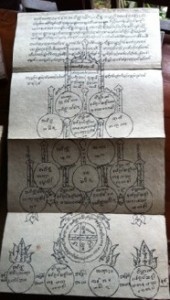
An Introduction the World of Shan Manuscripts

Throughout my hiatus, things have been moving swiftly ahead, even if I haven't been highlighting or commenting on them. Whether conferences, publications, videos or more, the Shan State continues to build its profile with those interested in its inner workings, its people, its culture and more, and much of this has taken place outside a public relations/media boom related to more political and economic things happen in greater Burma/Myanmar. While I am overjoyed at the wider and deeper focus, I wish to continue to focus my efforts on the Shan State alone and leave the more broad conversations to others. 

And what way can be better to advance this thirst for and desire to share knowledge than to promote the rise of Shan manuscripts across a number of institutions worldwide. But this is not a new phenomenon nor is it a surprising outcome for a culture that has a deep and detailed tradition of producing literature, most in manuscript form, over the centuries. 

Others are far more adept at speaking on Shan manuscripts - their production, history and significance (see the SOAS link below) - so I will leave the details and explanation to them. Rather, I'd like to highlight that many of these manuscripts, previously unknown or locked away for safekeeping, are now available in digital form, allowing better access for a wider readership worldwide. While the production of new manuscripts is faltering today (there are various reasons, many of which I would rather avoid underlining), but much has to do limited contact between those who can teach and those who want to learn; this is also due to a general decline (forced, by necessity or through coincidence) in Shan learning and usage. Regardless, Shan manuscripts that were previously found only and across Shan State, mainly in Buddhist monasteries but also in private homes, are now available electronically.​


The UK is a leader in the preservation and promotion of Shan manuscripts, led by diligent academics and others at a number of universities, including Cambridge University Library (over 400 texts catalogued by Sao Saimong Mangrai, a Shan scholar) and the Bodleian Libraries of Oxford University. Others are held in British Library (Special Collections) and in the Library of the School of Oriental and African Studies (SOAS) at the University of London. Other special projects, such as those to catalogue Shan manuscripts (e.g. the SOAS-based Shan Buddhism at the Borderlands project and the Oxford’s Bodliean Libraries-based Revealing Hidden Collections project) as well as an exhibition of digital images of Shan manuscripts (via the SOAS Archives)  have greatly supported efforts to promote Shan manuscript management and promotion. 

To learn more about efforts to support, catalogue and preserve Shan manuscripts, especially through digital efforts, please visit the SOAS Library's page on Shan Manuscripts. 

For now, we can be comforted in a resurgence of interest and support in Shan manuscripts and hope that it continues. 

Jom lii kha, 

Naw Liang

17 December 2012

Another year, another great celebration!
The 2107th Shan New Year celebration in London
by Naw Liang

Mai soong kha! 
Welcome back to All about Shan Studies. Although it may have appeared that we have disappears - taken a hiatus perhaps? - it's just been the usual rigmarole  about this, that and everything. We are still here, always in spirit at the very least.  

Once again, it is that time of year. Not just for Christmas-related and other festive elements, but of an equally important event: Shan New Year or Pii Mai Tai. And, once again, my alma mater, The School of Oriental and African Studies (SOAS), is set to be the host of this great, important and fun event, the spot for Shan enthusiasts and others in  and around London in early December to come together and celebrate. You won't want to miss it, and we hope to see you there.


The Shan are the predominate ethnic (minority) group throughout the Burma/Myanmar's eastern states (Shan State, Kachin State, Kayah State) and numerous into Yunnan Province (PR China where they are known as the Dai), Northern Thailand (where they are called the Tai Yai) and Assam State (India where they have several names, including Tai-Ahom, Tai-Khamti and Tai-Phake, though this last moniker is unknown to me.


Held in London (and the UK) since 2005 and from 2006 at SOAS, this year's Shan/Tai New Year celebrations have grown in popularity ever since. Promoting and celebrating Shan culture, the festivities are led by the The Shan Cultural Association in the United Kingdom (SCA-UK) who will once again put on a comprehensive and enticing programme of Shan/Tai culture to ring in 2017. We fully recommend the dances and music - events that should not be missed.


Everyone is cordially invited to come and enjoy the festivities of the 2107th Shan/Tai New Year.


Please visit the Shan Cultural Association in the United Kingdom (www.sca-uk.org.uk) for details.

Until then, jom lii kha, 

Naw Liang

14 April 2012

Obituary: Adrian Cowell (1934-2011)
By Naw Liang(in London, UK and Amsterdam, The Netherlands)

Mai soong kha. 

Despite the dating of this post, it has been too long between my contributions to All about Shan Studies. My apologies. 

This is particularly bad as there has been a deluge of Shan-related information – mostly and thankfully available through the internet – since last autumn when the seeds of change were planted in Burma/Myanmar. While this blog has never had a political agenda, the palpable opening up of Burma/Myanmar to the world, and the world’s measured acceptance and embrace of it has been groundbreaking – not only (and most importantly) for local people, but also for followers, academics and enthusiasts of Burma/Myanmar and its diverse cultural background, including the Shan. For these reasons, I have decided to dedicate more time to keeping up with the happenings in the Shan and greater Burma arena to truly live up to the All about Shan Studies agenda – to spread information and interest on the Shan worldwide. 

That said, this post feels somewhat disjointed for a number of reasons. While my pledge above is entirely positive, the first post to follow this agenda is not. The passing of an important figure for the spreading of Shan insights, the anthro-docu-enthusiast filmmaker Adrian Cowell in October 2011, is a wholly sad event, a major loss to the decimation of unique Shan insights by a true ethnographic giant. If any solace can be taken from this loss, however, it is that his passing in late 2011 will help to highlight and share his incredible work with not only the next generation of Shan enthusiasts, but also allow locals in Shan State to view his documentaries and see a little bit of a past life that has sadly all but faded away.

While ‘enjoy’ might not be the right sentiment, I do hope that the following post helps those of you new to Cowell’s work to marvel at its brilliance, whilst also allowing those of you versed in his productions to revisit and enjoy them all over again.

I guess ‘enjoy’ was the right word after all.

Adrian Cowell – Asia enthusiast, documentary filmmaker, video-anthropologist, opium investigator and Shan State enthusiast
I was first introduced to Cowell’s work during my studies at SOAS via a little known, but riveting film called ‘Raid into Tibet’ (see here). Shot by Cowell, filmmaker Chris Menges (The Killing Fields) and George Patterson in 1964 is a remarkable, one-of-a-kind film that documents the Tibetan resistance movement following a revolt against China in 1959 (I urge anyone who can to watch this video).

Born in China in 1934, Cowell only returned to Asia in 1955-56 with a group of fellow students overland from London to Singapore via the Ledo Road (also known as the Stilwell Road) in northern Burma/Myanmar. Travseing the Kachin and Shan States and then into Thailand, this experience peaked a close relationship with the Shan State that included long periods with several armed insurgent groups such as the Shan National and Shan State armies. Burma/Myanmar, in particular the Shan State, had gotten under his skin and would remain a constant itch for nearly 40 years. 

The Shan State and ‘The Heroin Wars’ 
After learning of Cowell’s passing, I revisited his ground-breaking 1990s television series entitled The Heroin Wars (available through Bluefrog Films (see here), which I initially came across during research into indigenous development in the Shan State. While only tangentially related to my work, the series provided a wonderful historical video insight into 1960s Shan State and the growing conundrum surrounding heroin production. The series, snippets of which can be viewed online (see Part I, Part II and Part III), is a pure example of Cowell’s prowess at not only achieving unprecedented access to, but also capturing 1960s Shan State life (albeit linked to heroin) without contaminating the view. I have yet to find films that either document concerns about heroin in the region or provide such a clear view of 1960s Shan State; anyone with access to such films/videos, please get in touch.

Cowell’s time in and around Kengtung in eastern Shan State, much spent with the Shan National Army, for several months in the mid-1960s helped create The Opium Trail, a television documentary that was aired by PBS in 1966. This was followed by the much acclaimed The Opium Warlords (shot by Menges and produced in 1972) and The Opium Kings (aired in 1997 on PBS and including an extensive interview with Cowell) following subsequent returns to the Shan State, including a sixteen month stint with the Shan State Army (SSA) where the team were trapped in Burma/Myanmar during heavy fighting between the Tatmadaw (Burmese army) and the SSA in Shan State. It is deeply regrettable that there are no online sources to view either of these remarkable films. Any assistance is greatly appreciated.

Despite not being publically available or easy to obtain at least), Cowell’s vivid videographies not only recorded the real, on-the-ground life of 1960s Shan State and the heroin trade, but also showcased his expertise at narrating the opaque opium trade throughout the Golden Triangle: in particular, how the drug trade had created and fed the never-ending cycle of chaos within eastern Burma/Myanmar. Cowell was also brazen by documenting the complicity of the Burmese army (security, support, profiteering, production) in the drug trade and how their involvement encouraged rather than hindered lawlessness in Shan State.

Cowell’s contact with the Shan State seemed to end in the mid-1970s when he took up indigenous issues in South America, particularly the Amazon basin, to bring attention to environmental and cultural destruction through the five film series entitled The Decade of Destruction.

However, in the 1990s, Cowell revisited opium in Southeast Asia and Shan State through The Heroin Wars, his last major documentary, and a number of other opium-related productions, following the impact of the drug trade in heroin from Shan State to Hong Kong and beyond, even as far as presenting his findings to the White House. 

Despite the waning of his focus on Shan State in his later years, the catalogue of ground-breaking films, concentrated on the opium trade, is invaluable. It is hoped that Cowell's work will become more available to a wider audience soon as it would be a terrible waste otherwise. For now, although of limited consolation, Cowell's library of authentic and unimposing documentary filmmaking of the Shan State is a wonderful example of a man who understood, sympathised with and care about the Shan State and its people.

He will be sorely missed. 

Jom li kha,

Naw Liang 

*I have used several sources for this article, particularly Bertil Lintner’s excellent obituary in the October 18, 2011 Asia times (see here).

14 November 2011

Happy 2106th! Another year gone, another Shan New Year celebration on the way
by Naw Liang

Mai soong kha! 
It has been, well, too long. I could get into the excuses/reasons for being away from All about Shan Studies - leaving you confounded, surprised and, ultimately, bored - but I won't. Maybe another time. 

Right now, as the Christmas decorations (or, if you are somewhere less commercial (read: Christian, in some parts) and other festive elements start to take over our senses, I was reminded of another very important event set to take place in about a month's time: Shan New Year. Passed along by the always helpful staff of my alma mater, The School of Oriental and African Studies (SOAS), this email has put me back on the right track. For any Shan enthusiasts in & around London in late November, this is one even that you cannot miss. Hope to see you there.
 
SOAS, University of London's Brunei Gallery)
The Shan are the predominate ethnic (minority) group throughout the Burma/Myanmar's eastern states (Shan State, Kachin State, Kayah State) and numerous into Yunnan Province (PR China where they are known as the Dai), Northern Thailand (where they are called the Tai Yai) and Assam State (India where they have several names, including Tai-Ahom, Tai-Khamti and Tai-Phake, though this last moniker is unknown to me.

London (and the UK) have been blessed since 2005 when Shan/Tai New Year celebrations were first 'officially' held; they are now an increasingly popular event since they have been held at the University of London from 2006. Arranged not only to celebrate, but to promote Shan culture, the festivities have been led by the The Shan Cultural Association in the United Kingdom (SCA-UK), a dedicated group of people eager to showcase Shan literature and culture. This year, the SCA-UK will once again put on a comprehensive and enticing programme of Shan/Tai culture talks to celebrate the 2106th Shan New Year, including displays and dances/music that should not be missed.
 
Divided into two parts, this year's celebrations combine an academic programme (morning and early afternoon presentations by well-known speakers and researchers on Shan manuscripts, Dr. Kate Crosby (SOAS), Dr Gillian Evison (Oxford) and Dr Andrew Skilton (SOAS/Cambridge) and a performance programme (late afternoon to evening) that features traditional performances, such as the unique Shan traditional Kinnari dance and costumes show.
 
Everyone is cordially invited by the SCA-UK to attend and join in celebrating the 2106th Shan/Tai New Year.

For further information, please contact the following people:
 
  • Mr Jotika Khur-Yearn (SOAS & SCA-UK) E: jk53@soas.ac.uk M: 0754 062 6667
  • Dr Betty Kunjara, (UCL) M: 0779 695 1904
  • Mr Sai Seng (SCA-UK) M: 07974689226
  • Dr Nang Hnin Nu Nu Kyi, (SCA-UK) M: 0755 796 7976 
Please visit the Shan Cultural Association in the United Kingdom (www.sca-uk.org.uk) or email (

Until then, jom lii kha, 

Naw Liang

18 May 2011

Dictionaries develop while language texts languish
By Naw Liang (London, UK)

Mai soong kha!
Once again, it's been a while. I hope everyone is well and enjoying summer wherever they might be. I would usually leap into a long intro about another nice, but probably wet and slightly cold British summer and how I have been trying to keep certain traditions alive - like the good ol'barbeque - but I can't. You see, London and many parts of the UK have been scarred from several days of unparelleled and inexplicable rioting, looting and violence by roving gangs of anrgy young people. Just whey they are angry is a mystery as is their reasons for targeting neighbours, local businesses and more. It's been a touch time of fear, worry, frustration and, in response, widespread anger and even solidarity by the innocent majority. What will happen I don't know, but things may not be the same again, at least for a long time.

Now, back to Shan Studies. I've been digging around in my archive of edited-but-not-yet-published postings and came across this one. I have left it largely intact for two reasons: I believe that my point - campaigning for someone to develop a proper language text or text series for Shan - is still valid because I have yet to come across any new literature of late; and 2. any editing of this post now would either corrupt the point or result in a complete rework, meaning more delays before it's up and ready for viewing and commentary. The inaccuracies too have their value as they might just encourage some hot debate. Gosh, I hope so. 

Anyway, here it is, Enjoy and all comments are welcome - as always.

Learning Shan: are all the necessary tools available?
I have, over several years now heard of, been introduced to and even discussed with several Shan lexicographers their efforts to improve the catalogue of Shan language resources. Shan, English, German, American, Canadian or other, the number of these dedicated people and their ambitious projects continues to grow. Unfortunately, I fear that they believe that they are working (or suffering) alone; I hope to help disprove this with a future post listing recent Shan language learning and lexicographic works on this blog. Individual insecurities aside, it is wholly encouraging to hear that these projects - amateur, guided or professional - are being started and completed by competent individuals with skilful language skills who are eager not only to share their insider knowlegdge with others, but also (and by doing so) assist those of us intersted in learning Shan. 
Very encouraging times indeed.

If only I had sufficient time to dedicate to this longed for learning.

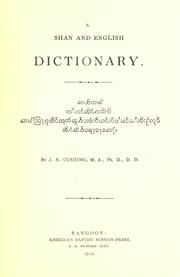
The growth of diciontary production is surely positive, but still, I cannot help but wonder the true benefit that might come from such in-depth work. There is most definitely a need to document the Shan language for future generations (this is certainly not a priority of the ruling Burmese government), particularly for the largest number of diaspora who risk losing language proficiency as they try to integrate into new environments, often far away from other Shan speakers And yes it is obvious the sense of satisfaction that one would feel when completing such a daunting task and rest alonside the works of Rev. Cushing (1881), which can be read here, Sao Tern Moeng Mongyai (1995) or a number of others that have been published since 1881; see the Shanland article here that documents Shan language dictionaries produced since then, namely a Shan-Thai dictionary that took 17 years to produce and was completed in 2009. Each of these efforts are colossal, invaluable and to be respected. It is quite sad to know, however, that few people, including the Shan whom I am sure they were originally produced to help, will ever understand the true sacrifice.

Still, for all this work...is it really necessary? Could something else be more needed?
In my narrow view, what is really truly lacking for Shan language enthusiasts and other interested parties is a true, comprehensive - even if extremely elementary to start - language text for beginner or false beginner learners. This is where the real need is. Having studied a number of languages already and having known countless individuals like myself, dictionaries, although invaluable in the right hands, are a necessary tool only when a solid language foundation - the grammar, the script, some standard introductory phrases and conversation starters - has been laid. After you have learnt the basics, which for many will be far away from Shan State, you can release the power of these and other dictionaries, which will multiple the language potential of any eager Shan student. More simply put: if I can't string together a four-word sentence, what value is a dictionary that only tells me the proper Shan word for dandelion, differences between evening and night (if different) or the proper polite titles for addressing specific person based on their relationship to me? I'm afraid the answer is: little. Dictionaries and the efforts of those constructing them will miniscule if their target audience - be they diaspora Shan, interested Thai or intrigued foreigner - are unable to read or employ them. In the end, such dictionaries are often viewed as elite-for-elite work - privileged people seeking praise from a tiny, elite group. Having been there myself (I produced a book on a dying, local dialect in western Japan) and now clearly see that, even though the intentions may be noble, the product can miss the point. 

Disclaimer and request
I want to stress that I, in no way, am discouraging anyone from attempting to write a dictionary (on any language). Such a goal is to be respected and supported. But what I am suggesting is that individuals with the tools to help others learn Shan might consider looking at where the need exists before leaping off to revise chokable-chunks of Cushing's 130 year old work. As for my request, I would love to see a new, revamped and energetic introductory series on learning Shan (some do  exist, but they are inaccessible for a variety of reasons) so that not only I, for selfish reasons, can purchase on and start learning 'properly', but so that others can learn of the Shan language and help broaden its horizons. 

Jom lii kha, 

Naw Liang

17 April 2011

Spotlight: The School for Shan State Nationalities Youth (SSSNY)
by Naw Liang (Helsinki, Finland and London, UK)

Mai soong kha!
Well, Spring has sprung - at least in my tiny part of the world - and with it comes renewed energy from longer sunshine hours for daydreaming about summer vacations. This year might even see a long awaited return to the Shan State, but, for now, we wait with baited breath and itchy feet.

For now, it's back to All about Shan Studies and another nugget of knowledge for all. Enjoy...


The School for Shan State Nationalities Youth (SSSNY)
While fumbling through an inbox crammed with Shan news and internet info, I came across another Tai Yai gem from Chiang Mai (I really need to get out there pronto). Another active Shan organisation, this group has a vision very close to my heart - education - and I hope to learn more about and contribute to it and its programmes in the near future.

As stated on their website, the
School for Shan State Nationalities Youth (SSSNY) "...was formed by a group of youth from Shan State in May 2001 [to] provide a social justice education program for youth to take an active role in the movement for social and political change." A fantastic goal, they are now preparing to accept the 11th class for its Social Justice Education programme (SJEP), a 10 month course that instructs 30 intermediate English-speaking Shan youth (between 16 - 35 years of age) to promote social justice and change in Chiang Mai, northern Thailand, the Thai-Burma border and, in smaller numbers, inside Shan State. Determined sentiments ring out throughout the website through words and phrases like 'empower', 'active role', 'democracy', 'human rights' and 'gender equality'. There isn't enough room here to praise everything here, so please visit their website for further details.

SSSNY: grand goals that suit a massive need
SSSNY is the product of not only admirable goals and considerable effort, but through a real need: Burma/Myanmar not only has a chronic nationwide lack of education funding and resources - only an estimated 0.5% of the national budget is spent on education - Shan children and young people are doubly handicapped. Not only are they prevented from receiving adequate education by the perpetual problems found in Burma/Myanmar and the Shan State, especially those living along the volatile border, but those living in Thailand are as yet not official recognised as refugees by the UN High Commission for Refugees and by the Thai government, meaning they face extreme difficulty to receive even the most basic support, including their right to education. Sadly, most young Shan end up forgoing any education in favour of manual labour to help support their families.

Since 2001, SSSNY has championed the right that young Shan have to education, not only for their own lives, but to promote social and democratic change in Burma/Myanmar. SSSNY's teaching methods have also been designed to engage students as "..participatory learners...to encourage critical and creative thinking skills" that SSSNY believes will empower them to take a pro-active role for social and political change.

We sincerely hope so.

For now, have a look at the website when you can.

Jom lii kha,

Naw Liang

05 March 2011

An intellectual taster: Shan mystical formulae by Dr. Susan Conway
by Naw Liang (London, UK and Rio de Janiero, Brazil)

Mai soong kha!
Slightly breaking with All about Shan Studies tradition, I won't start this post with my usual self-deprecating 'I'm sorry I haven't been productive' routine. The truth is I've been busy, I've been away and, unfortunately, I've found it difficult to find the time and energy to dive into my Shan Studies recently. Sadly though it may seem, my professional life and my pseudo-academic life have reached a crossroads that, I fear, may make or break one or the other. This was how I started 2011, sitting on the fence and wondering which way I might topple.

SOAS and CSEAS seminar series: 'Shan mystical formulae - dealing with risk and uncertainty' by Dr. Susan Conway (SOAS University of London)
In the end, I didn't topple, and it was largely down to a seminar that I was dying to go to, but missed. Yes, it is confusing, so let me explain. I have known of Dr. Susan Conway (or visit her private page here) since I began this blog and following a chance meeting in September 2006 during a previous CSEAS seminar entitled "Eating the horses" by Dr. Conway. That meeting helped fuel a long-term desire to research the Shan that I had placed on the back burner for too long. Once again, now nearly five years later and as my drive to investigate all things Shan was once again waning, Dr. Conway arrived again with a seminar that combined my current professional leanings with my curiosity with the Shan.

For the past five years, risk and uncertainty have been at the heart of what I do everyday. I investigate, analyse, mull over and make decisions related to risk and uncertainty on a global scale, interweaving a number of cultural (business, social, investor) spheres to do what I feel is best for my company and people. It often feels like a religious procedure - investigating the truth, deep mediation on the facts, 'soul searching' the choice and, in the end, a leap of faith - and, regardless of the outcome, there is always a deep seated lesson (for those who are aware enough) at the end. It tests you daily, but the feeling of accomplishment (or failure) is real and tangible and worthwhile.

I really wish I had attended Dr. Conway's seminar on 1 March at SOAS University of London. For what I can imagine, she has weaved an intricate, but accessible tale of Shan historical and religious elements to illustrate how the Shan may (or may not) deal with risk and uncertainty in their daily lives and in the 'grand scheme' of things. I hope to get in touch with her to receive a copy of the presentation (or just an overview) so that I might better construct any parallels or recognise any similarities between how they do things 'over there' and how things are attempted 'over here'. Expect a follow-up blog shortly.

For now, while I cannot provide any commentary on the presentation itself, it is worthwhile simply to recognise that driven and insightful people like Dr. Conway are constantly and consistently not only developing remarkably creative research, but continuing, through their scholarship, to encourage others to contemplate, investigate and comment on issues that might just pertain to us all. And, yes, she is good enough to encourage some of us more than once.

Mai soong Susan and jom lii kha everyone,

Naw Liang

26 January 2011

Book Event: Discussion with author Bernice Koehler Johnson (The Shan: Refugees without a Camp) in Chiangmai, Thailand (30 January 2011)
by Naw Liang (London, UK)

Mai soong kha and a belated Happy New Year to everyone!

Once again, another year has come and gone. I hope that
everyone's year-end and year-opening celebrations - whether you go by the Shan calendar, the Western construct or both - were exactly what you were hoping for be it excitement, relaxation, time with friends and family or a combination of these and more. 2011 has already shown that it will be another wondrous 12 months, and I am eager to see what else is in store. Most of all, I thank you each and everyone of you for visiting, re-visiting and, most of all, encouraging me to keep this important blog going. The output on All about Shan studies may have more valleys than peaks, but I can assure you that I, with your help, always have more ideas in the works, so you can expect more to come. That is a promise. Now, on to my latest offering.

Chatting with author Bernice Koehler Johnson (The Shan: Refugees without a Camp (2009)

As presented in a previous post (see here), 'The Shan: Refugees without a Camp', a thoroughly enlightening and first-hand account of the plight of Shan refugees along the Burma-Thai border, by veteran English teacher Johnson was presented and reviewed. The book, which discussed Johnson's annual trips to the border to teach Shan refugees, is a must read for anyone interested in the Shan as well as those eager to get some well-written accounts of border life. I highly recommend it.

Now, in a follow-up event, a number of Shan support groups and other organisations in Chiangmai, Thailand have arranged a discussion event wtih Johnson to learn more about her experiences, her decision to write the book and her life since it was published in July 2009. Schedule to be held at the Sangdee Gallery and Caf
é in central Chiangmai (see link here) - a hub of Shan activity in Northern Thailand - and the event will include a short reading followed by a discussion between the author and special guests Khuensai Jaiyen (Editor of S.H.A.N.) and Charm Tong (member of the Shan Women's Action Network, a Nobel Prize nominee). The atmosphere and discussion are certain to be electric, making this event a must see for those lucky enough to be in Chiangmai. I certainly wish I was.

I would appreciate any commentary from those who attend the event.
Mai soong kha in advance.

Jom lii kha,

Naw Liang

10 October 2010

Another first: Burmese Arts Festival (14-17 October)
by Naw Liang (London, UK)

Mai soong kha!
I'm back from overheated Japan and enjoying the proper British fall weather, colours and brisk mornings that almost make me want to return to university! While that is a distinct (im)possibility, there are a number of events that I am keen to participate in. The first ever Burmese Arts Festival is certainly one of them. I hope to see you all there.


Bringing together creatives linked to Burma/Myanmar
The Burmese Arts Festival (for details, see here) is the first event of its kind for London: the bringing together of Burmese artists and authors as well as those inspired by the South East Asian country to express, expose and share their thoughts, feelings and interpretations with the British public. Sponsored by a number of associations, including the
Writers and Scholars Educational Trust, and assisted by a number of prominent Burmese figures, including former British Ambassador to Burma/Myanmar and translator Vicky Bowman, the four-day event in Central London (for a map and instructions to the Free Word Centre, look here) will showcase art exhibitions and installations, performances (music (classical, hip hop/rap and other) as well as viewings (video, film and documentaries) by people from Burma and those inspired by the country and its people. Notable presenters include Wendy Law-Yone (see bio here and a review of her latest book, 'The Road to Wanting', here) and hip hop artist Thxa Soe (see his website here) among others. A discussion panel of authors, a cabaret, numerous screenings, dances, presentations and other events, including a traditional Burmese tea shop (Saturday and Sunday only) will also add to the distinct Burmese flavour and air. For further details, including how you can get tickets before the event (let's hope it's not sold out), can be found at the English Pen's page on The Busmese Arts Festival.

This promises to be a great inaugural event - one that will certainly maintain the recent boom in interest in Burmese and Shan studies. Hope to see you there.

Jom lii kha,

Naw Liang

26 September 2010

One of a kind: Study Shan Buddism at SOAS
by Naw Liang (Kyoto, Japan)

Mai soong kha!

While braving the extended summer in central Japan - it was 36C in Kyoto in late September - I was pleasantly surprised by an email out-of-the-blue. Anything to get my mind off sweating. A short, but encouraging email from a fellow Shan enthusiast and academic revealed that something exciting was afoot at SOAS: the launch of the first ever official Shan Buddhism course for 2010 fall term. I hope that I'll be able to make it back to London to participate. Fingers crossed...

Pioneering: SOAS launches inaugural Shan Buddhism course

The email was short, but certainly sweet. Several Shan researchers and academics resident at SOAS University of London have managed to produce, arrange and get official approval for SOAS' first Shan Buddhism course. Open to undergraduate (BA) and postgraduate (MA and other) students of Theravada Buddhism, the course is a pioneer for Shan-specific studies in the UK; those persons not registered as students can also attend after registering as occasional students.

The course, led by Shan Buddhism academic Dr. Conway (
SOAS Research Associate and author of the Shan Culture, Arts and Crafts (2006) (see a review here) and Mr Jotika Khur-Yearn (Assistant Librarian for Southeast Asian Studies, SOAS Library and Researcher on Shan Buddhism and literature), the course will provide an introduction to Shan Buddhism, including:
  • Histories of Shan Buddhism. Discussion of Shan Buddhist authorities, including textual, spatial and personal features of Shan religious identity;
  • Discussion of the salient features of Shan Buddhist doctrine;
  • Inspection of the aspects of Shan Buddhist practices, including ordination patterns, role of temple, media of transmission, festivals, soteriological, transformative, merit-making, communal and apotropaic practices;
  • Introduction to the visual forms of Shan Buddhism, especially temple layout and architecture, sacred art and dress, etc; and
  • Debate on recent and current threats to the practice and preservation of Shan Buddhism
Starting on 5 October (very shortly!), the two-hour lectures will be held on Tuesdays from 5-7PM over a period of 11 weeks (ending on 14 December 2010) in Room B104 of SOAS' Brunei Gallery Building. In addition to Dr. Conway and Mr. Khur-Yearn, a number of lectures will be conducted by visiting and distinguished Shan scholars (to be announced).

For now, further information can be obtained from:

Susan Conway (e: sc66@soas.ac.uk or tel: 020 7352 9890) or
Jotika Khur-Yearn (e: jk53@soas.ac.uk or tel: 020 7898 4173
)
As the course is set to start shortly, those who wish to register should consider contact by telephone. Registration can be conducted at anytime, depending on availability.


This is an excellent opportunity, one that I wish I had had during my studies at SOAS some time ago. And, with interest in Shan studies growing exponentially of late, I am certain that this is only the first of many Shan Buddhism courses as well as the catalyst for other Shan area study courses in the future
.

Jom lii kha,


Naw Liang

06 June 2010

Digital folklore: Gutenberg puts Shan literature online
By Naw Liang (London, United Kingdom)

Mai soong kha.
Summer is in full swing and, for the first time in months, I am back into my Shan research, renewed by the sunny weather and slower work schedule. Most of all, I am loving the long, bright nights that make reading - done in the back garden overlooking green hills - that much more enjoyable. A cold beer or glass of wine also helps.

I've been eager to write more about Shan literature - what is available online and, limited by my poor Shan language skills, in English - especially folklore, myths and legends. Then, a few weeks back, a Shan friend passed along a wonderful tidbit of information. It was so good it is only right to share it with the rest of you. Enjoy.


The Gutenberg Project: Uploading Shan folklore online for free and for all

The Gutenberg Project, the first and largest collection of free electronic books (ebooks) online (mainly for books whose copyright has expired), has recently expanded its catalogue to include a number of specialty texts. One such book will be of keen interest to All about Shan Studies and other Shan enthusiasts - William C. Grigg's "Shan Folk Lore Stories from the Hill and Water Country" (1902) (also see here, though Amazon.co.uk should be informed of the spelling mistake in the title - Lore not Lord). This author has yet to look through the book (whichever title), but the fact that the Gutenberg Project has now posted the entire book online, I have no excuse, but to dig in and learn. I hope that each of you will also, at the very least, give this text a glance and let us know what you think whenever.

While the free online offering is sure to have many supporters (who can complain about free?), it also highlights recent debate - led by corporate actions by Google from 2008 onwards - on copyright laws, gaps in international legal systems concerning the internet and the rights of authors before, in the process of and after literature is uploaded to the internet. An fledgling author myself, I sympathise with both sides: while having your work read is not only critical, but very complex and ultimately satisfying, the fundamental desire to retain rights to one's literature cannot be ignored. And, while I am sure that Mr. Grigg's would have appreciated the publicity, I also know that he would have liked to receive something in return for his hardwork to put the book together. This is certainly a complex issue that will, with the increasingly use and spread of portable readers, will only grow over time.

For now, however, we should count ourselves lucky to not only be given a free peek, but the ability to download and own - albeit only digitally - a copy of Grigg's text to enjoy again and again. I wonder ho you say "Happy reading" in Shan? Any suggestions?

Jom lii kha,

Naw Liang

04 May 2010

News: Burma issues visas-on-arrival at Yangon and Mandalay airports
By Naw Liang (London, United Kingdom)


Mai soong kha.
I had been hoping to post another article - a doozie still in the works - but this took
precedent, even if it is not 'specifically Shan'. My initial reasons for posting resembled glee, but that sunshine quickly faded upon reading all the necessary (maybe commonplace is better?) detail that followed. Today's moral is: always read the fine print.

Burma announces "visas-on-arrival" for visitors from 1 May 2010
As reported in The Irrawaddy (see
here), the Burmese government's immigration agency reported that it was now providing visas to all visiting foreign national from 1 May at Yangon and Mandalay International Airports upon arrival. The options (and charges) for such visas-on-arrival are:
  • 28-day tourist and social visa (US$30);
  • 24-hour transit visa (US$28); and
  • 70-day renewable* business visa (US$40) (can be renewed at the respective ministry)
Unlike previously, when all visas had to be applied for and receive pre-travel approval from Burmese overseas embassies or representatives, the new visitor visa system allows prospective visitors to apply online or at airline offices up to two weeks prior to departure to receive their visa-on-arrival. Sounds great, but...

Apply before for a visa-on-arrival? I'm confused

Yes, it is confusing, and no, it is not what it 'says on the tin'. All visitors must
pre-apply for visas-on-arrival (exactly as before), only now it will be done through travel agencies or tour companies (like some did before) instead of at Burmese missions or embassies (like others did). Also, all previous visa regulations - such as conducting only activities permitted by the visa, avoiding restricted areas, reporting movements within the country to township immigration and/or national registration offices and declaring sufficient funds (US$300 for individuals; US$600 for families) - still apply. Furthermore, those people with 'histories' may find themselves high & dry on arrival, and are advised to apply beforehand to avoid problems. And, as mentioned by a knowledgeable reader, there is no new information on the US$3 per day fine for overstaying.

While rules about registering through package tours and local travel companies still apply, increasing numbers of visitors to Burma arrive individually, having received clearance by themselves so that they might manage their own visit. It appears, however, that this might
under threat, though my thoughts are merely conjecture. As it stands, the pre-application of a visa-on-arrival will place additional pressure on the relevant travel industry, which will be responsible for their foreign visitors (and any incidents, whatever that means) during their Burmese sojourn. Visiting foreign nationals will have to submit the same details to the travel companies as they would have for an embassy- or mission-obtained travel permit (personal data, passport information, travel itinerary (?), which the agents will then pass on to the Ministry of Hotel and Tourism for official approval. What follows resembles the system now: waiting, wondering and, fingers crossed, an official letter from the Ministry of Immigration and Population prior to take-off. It also doubles the 'investigation' into a prospective travel permit holder. Why? We can only guess.

Most crucial, the new pre-arranged visa-on-arrival increases costs for visitors. Tour and travel companies will most certainly charge for this added responsibility and administrative work, somewhere between US$35 to $50 for a service (as estimated by The Irrawaddy) that could take weeks. Furthermore, the new system does not - as no travel visa system could - ensure that all applications will be successful: foreign visitors could chose to challenge the pre-screening system and travel without the necessary pre-approval, resulting in messy discussions at Yangon's and Mandalay's International Airports; this would entirely be their own fault, but the ramifications could be substantial. Moreover, that is a situation where no one wants to be in or, officially, take responsibility for.

A final point
While the new system is bound to speed up the process - the beleaguered and skeleton staff of the Burmese foreign ministry are already swamped and/or disinterested - by placing responsibility on the tour company and not the Burmese government, it may signal the end of entirely independent travel to the country in some form. The addition of a second step, however privately controlled and, therefore, more efficient, also risks elongating an already slow process. Current systems inside Burma may be visibly lax or limited at times (as the cheap US$3 per day overstay fine indicates), but, to date, they have allowed for some creative travel choices by adventurous people eager to see the 'real Burma'. With more checks and balances, hoops and fees and involved parties, the possibility of increasingly travel inflexibility is high.

And that would be a definite step backwards - for all.

Kaung deh naw?

Naw Liang

07 March 2010

Event: The 2nd International Conference on Shan Buddhism and Culture at SOAS, University of London from 11-12 December 2010
by Naw Liang (Kyoto, Japan)


Mai soong kha.

Things are looking up: spring is here, the sun is shining and travel appears to be free-flowing again following the eruption of
the Eyjafjallajokull
volcano in Iceland and its 'ash cloud'. Even though business trips were postponed and work disrupted, my colleague put it best: "Think of this as a reminder to slow down. We're too rushed these days as it is." He was right, and I have enjoyed the break from our post-cheap-flight, "I want it now!" society.

In the interim, I was able to catch up on a few things for All about Shan Studies, including important upcoming events. The following post is courtesy an email announcement from Jotika Khur-Yearn, a budding Shan scholar and librarian at The School of Oriental and African Studies, University of London. Mai soong kha Jotika for your help.


The Second International Conference on Shan Buddhism and Culture
The second conference, to be held at
SOAS, University of London on 11-12 December 2010, follows the inaugural event held at SOAS in December 2007, which provided an ideal venue for a distinguished panel of scholars and independent researchers to share their insights into Shan Buddhism and culture. It drew a significantly international audience and rave reviews in the process, acting as a driver for subsequent events in Bangkok, the US and France. The focus this year is on the preservation of distinctive Shan culture and the early British-Shan encounter, and it is sure to attract a large and diverse crowd.

A brief background of the Shan and Shan conferences

Despite the Shan cultural region’s location being at the confluence (or is it watershed?) of dominant nations (Myanmar/Burma, Thailand, India, China), its Theravada Buddhist roots and culture have managed to preserve unique features, some derived from medieval India, others uniquely Shan. However, even though the region’s inaccessibility has allowed a protection (of sorts) of its unique culture and religious beliefs, the past several decades (in particular) have left the Shan people severely under represented in Buddhism and cultural studies internationally. More importantly, Shan material culture and identity are now, through improved access, threatened and eroding by political suppression and centralization. The first International Conference on Shan Buddhism and Culture in 2007 sought to highlight the lack of coverage, resulting in the publication of a number of Shan-specific papers related to Buddhist studies in the journal "Contemporary Buddhism" (Volume 10, Number 1 (May2009), which helped to document and reflect the uniqueness of Shan identity. The second conference will seek to go a step further to preserving the unique Shan culture by hosting a discussion between traditional Shan and Lao scholars on the transmission of their respective traditional cultures.

The conference is doubly important as it will also coincide with the celebration of the Shan New Year 2105. A number of events are scheduled, including a cultural show by the active SCA-UK on the evening of 11 December. Prominent Shan composers and singers led by renowned musician, Dr. Sai Kham Leik, will participate. The show will include also Shan classical and modern dances. For those more interested in traditional Buddhist literature, a performance by both Shan and Lao experts will take place on the evening of 12 December 2010.


Call for papers and general registration
Despite its end-of-the-year scheduling, Shan scholars are never ones to wait to the last minute, and a "First Circular and Call for Papers" has already been issued by the SOAS Centre for Buddhist Studies and the Shan Cultural Association UK (SCA-UK) for the event. Details of the submission of papers and proposals are as follows:

Papers are on any aspect of Shan Buddhist and cultural studies - such as social anthropology, archaeology, material culture, history, Buddhology, linguists and music - are welcome. Any proposals, including those from graduate students, of approximately 250 words should be sent to:
Jotika Khur-Yearn (jk53@soas.ac.uk) by Friday 30th June 2010.

Additionally information can be acquired from the event organisers (
Jotika Khur-Yearn, Kate Crosby, Khammai Dhammasami, SOAS Theravada Group and SCA-UK) and funding is available for would-be attendees, though limited.

Registration is required for everyone

I have been reminded that, due to limited places, anyone interested in attending (even if not presenting) should register in advance by email
to Jotika Khur-Yearn jk53@soas.ac.uk by Thursday, 30 September 2010. There is a registration fee for non-speakers (£10) that includes refreshments and Shan food. We look forward welcoming you to the conference and the Shan New Year celebration.

Looking forward to seeing you there, and jom lii kha,

Naw Liang

28 February 2010

Doomed by the hills: Why hill peoples wander Zomia stateless forever by Professor James C. Scott
By Naw Liang (London, United Kingdom)

Mai soong kha.
Inundated with work work and many other things not Shan, I have been eager to find something, anything Shan-related that I could sink my teeth into during those few stolen moments I manage to find each day. It's been tough work with few suitable results, though I am now set for Shan topics until at least next year (read: stay turned). Then, out of the blue, I found something - albeit a stretch - on the Shan by a well-known South East Asianist.

Enjoy.


Public Lectures and Events at the London School of Economics (LSE):
'
Why Civilisations Can't Climb Hills: a political history of statelessness in Southeast Asia' by Professor James C Scott (May 2008)
In May 2008, world renowned professor of political science and anthropology (specifically South East Asia) at Yale University (USA), James C Scott, gave a lecture at the LSE on a topic that, although not specific to the Shan, definitely focused on peoples like them in mainland South East Asia. Scott, a prolific and respected scholar on a range of subjects, including social/cultural anthropology, agrarian studies, subaltern studies, political and social capital as well as political science, is probably best known for his volume "
Seeing Like a State: How Certain Schemes to Improve the Human Condition Have Failed" (1999), a vade mecum for up-and-coming anthropology, political science and even development professionals, students and scholars. He has spent the past 40+ years studying the intricacies of mainland South East Asian peoples and politics. What I am certain will become his latest book, simply titled "Introducing "Zomia"" by Harvard University for a recent talk, Scott discusses the 'cleavage' created between plains and hill peoples in Zomia, a recent geographical term for mainland South East Asia that is governed by lowland peoples, such as the Thai, Burmese, Vietnamese and even the Chinese. Scott has spent the last decade researching this area and the interplay between lowland (and powerful) ethnic groups and their hillside (and less powerful) neighbours. It is heavy stuff, but highly thoughtprovoking.

Without giving away the secrets of the lecture, Scott's LSE event sought to provide some insight into the fundamental arguments and theories that he is currently working through as "Introducing "Zomia"" is completed. The talk, which you can listen to here, provided insight into the gamut of Scott's fantastic knowledge of South East Asian politics, history, anthropology and more. Although at times dense (reference, concept) and idiom-thick - Scott has a penchant for languages and enjoys sharing numerous 'sayings' throughout - the 80+ minute lecture and Q&A session is enlightening. In particular, I enjoyed his intriguing and supported belief that, rather than being shoved to the periphery by stronger groups through a variety of forces (slavery, war, cultural dilution and so on), hill peoples chose the border areas, most often inaccessible, to 'escape' through 'escape agriculture', 'escape social structure' and 'escape culture' to preserve themselves the only way that they could. Furthermore, Scott's theory that the sense of history for stateless people, such as the Shan, is simply the memory of struggle is truly sad, but fitting. I am sure that many of you, after chewing on the content, will start to see where Scott just might be coming from.

I look forward to reading the book: 1. (not if, but) when it's out and; 2. when I can find the time.

Jom lii kha,

Naw Liang